The Superwoman/Man: Superwomen and supermen take on excessive responsibilities, juggling multiple roles and tasks. Despite their accomplishments, they feel like impostors because they fear they’re not doing enough or that they’ll eventually fail. The pressure to excel in every area of life contributes to their self-doubt.
The Soloist: Soloists prefer to work independently and hesitate to seek help. They believe that asking for assistance would reveal their inadequacy. Even when they achieve success, they attribute it solely to their efforts, discounting any external support. This self-reliance can lead to feelings of being an impostor.
Remember, imposter syndrome is not a diagnosable mental illness but rather a common experience. Recognising these patterns can help individuals address their self-doubt and embrace their achievements more confidently. Want to discuss further in confidence, take advantage of my FREE no-obligation 30 min callCLICK HERE to book via Calendly.
The Five Types of Imposter Syndrome
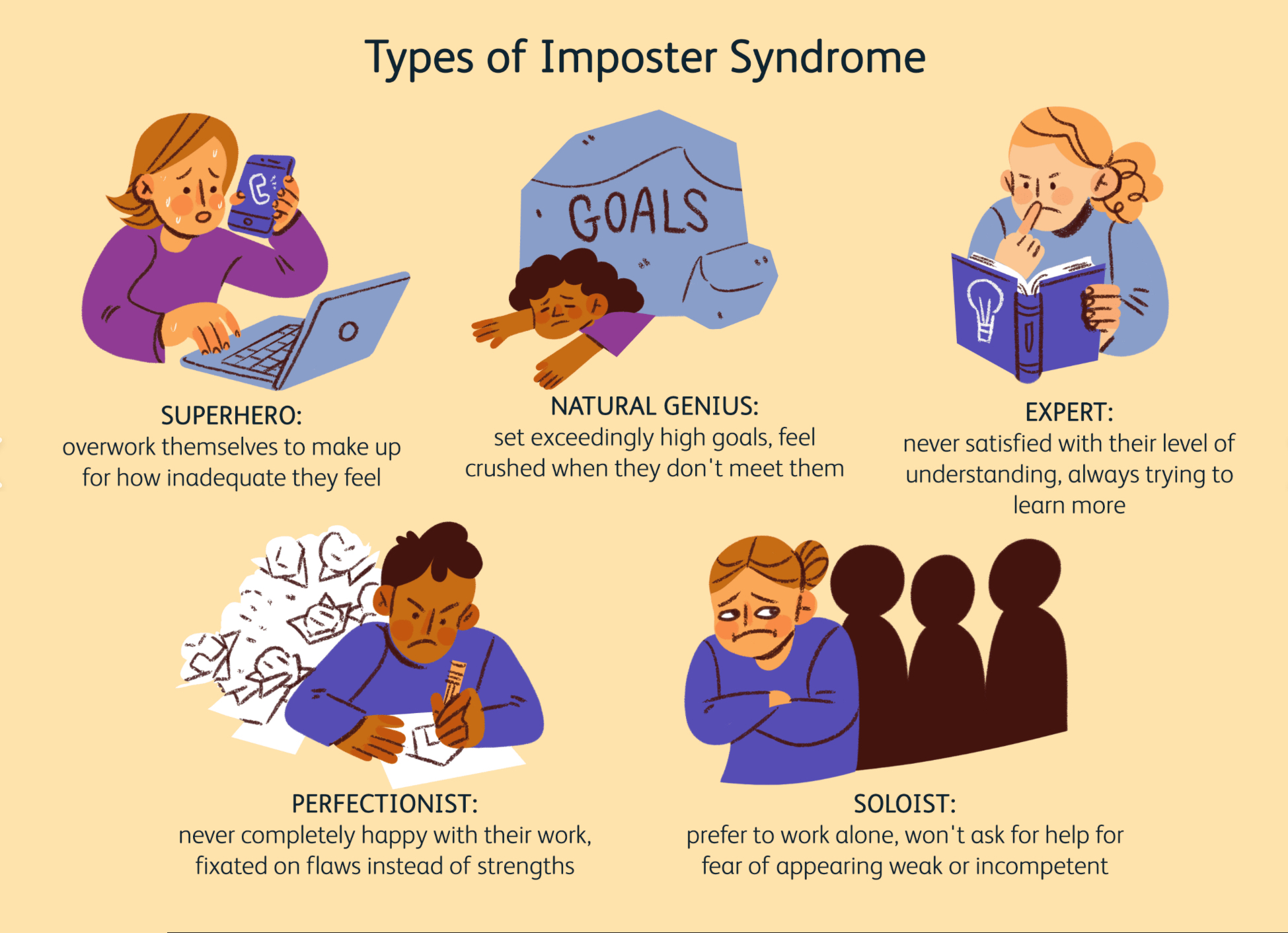
Imposter syndrome is a common psychological phenomenon where individuals feel likefraudsdespite their genuine achievements. It can manifest in various ways and impact self-confidence. Let’s explore the five types of imposter syndrome:
The Perfectionist: Perfectionists believe that unless they achieve absolute perfection, they are not good enough. They constantly doubt their abilities and fear being exposed as inadequate. Their high standards often lead to self-criticism and anxiety.
The Superwoman/Man: Superwomen and supermen take on excessive responsibilities, juggling multiple roles and tasks. Despite their accomplishments, they feel like impostors because they fear they’re not doing enough or that they’ll eventually fail. The pressure to excel in every area of life contributes to their self-doubt.
The Soloist: Soloists prefer to work independently and hesitate to seek help. They believe that asking for assistance would reveal their inadequacy. Even when they achieve success, they attribute it solely to their efforts, discounting any external support. This self-reliance can lead to feelings of being an impostor.
Remember, imposter syndrome is not a diagnosable mental illness but rather a common experience. Recognising these patterns can help individuals address their self-doubt and embrace their achievements more confidently. Want to discuss further in confidence, take advantage of my FREE no-obligation 30 min callCLICK HERE to book via Calendly.
The Five Types of Imposter Syndrome
Imposter syndrome is a common psychological phenomenon where individuals feel likefraudsdespite their genuine achievements. It can manifest in various ways and impact self-confidence. Let’s explore the five types of imposter syndrome:
The Perfectionist: Perfectionists believe that unless they achieve absolute perfection, they are not good enough. They constantly doubt their abilities and fear being exposed as inadequate. Their high standards often lead to self-criticism and anxiety.
The Superwoman/Man: Superwomen and supermen take on excessive responsibilities, juggling multiple roles and tasks. Despite their accomplishments, they feel like impostors because they fear they’re not doing enough or that they’ll eventually fail. The pressure to excel in every area of life contributes to their self-doubt.
The Soloist: Soloists prefer to work independently and hesitate to seek help. They believe that asking for assistance would reveal their inadequacy. Even when they achieve success, they attribute it solely to their efforts, discounting any external support. This self-reliance can lead to feelings of being an impostor.
Remember, imposter syndrome is not a diagnosable mental illness but rather a common experience. Recognising these patterns can help individuals address their self-doubt and embrace their achievements more confidently. Want to discuss further in confidence, take advantage of my FREE no-obligation 30 min callCLICK HERE to book via Calendly.
The Five Types of Imposter Syndrome
Imposter syndrome is a common psychological phenomenon where individuals feel likefraudsdespite their genuine achievements. It can manifest in various ways and impact self-confidence. Let’s explore the five types of imposter syndrome:
The Perfectionist: Perfectionists believe that unless they achieve absolute perfection, they are not good enough. They constantly doubt their abilities and fear being exposed as inadequate. Their high standards often lead to self-criticism and anxiety.
The Superwoman/Man: Superwomen and supermen take on excessive responsibilities, juggling multiple roles and tasks. Despite their accomplishments, they feel like impostors because they fear they’re not doing enough or that they’ll eventually fail. The pressure to excel in every area of life contributes to their self-doubt.
The Soloist: Soloists prefer to work independently and hesitate to seek help. They believe that asking for assistance would reveal their inadequacy. Even when they achieve success, they attribute it solely to their efforts, discounting any external support. This self-reliance can lead to feelings of being an impostor.
Remember, imposter syndrome is not a diagnosable mental illness but rather a common experience. Recognising these patterns can help individuals address their self-doubt and embrace their achievements more confidently. Want to discuss further in confidence, take advantage of my FREE no-obligation 30 min callCLICK HERE to book via Calendly.
The Five Types of Imposter Syndrome
Imposter syndrome is a common psychological phenomenon where individuals feel likefraudsdespite their genuine achievements. It can manifest in various ways and impact self-confidence. Let’s explore the five types of imposter syndrome:
The Perfectionist: Perfectionists believe that unless they achieve absolute perfection, they are not good enough. They constantly doubt their abilities and fear being exposed as inadequate. Their high standards often lead to self-criticism and anxiety.
The Superwoman/Man: Superwomen and supermen take on excessive responsibilities, juggling multiple roles and tasks. Despite their accomplishments, they feel like impostors because they fear they’re not doing enough or that they’ll eventually fail. The pressure to excel in every area of life contributes to their self-doubt.
The Soloist: Soloists prefer to work independently and hesitate to seek help. They believe that asking for assistance would reveal their inadequacy. Even when they achieve success, they attribute it solely to their efforts, discounting any external support. This self-reliance can lead to feelings of being an impostor.
Remember, imposter syndrome is not a diagnosable mental illness but rather a common experience. Recognising these patterns can help individuals address their self-doubt and embrace their achievements more confidently. Want to discuss further in confidence, take advantage of my FREE no-obligation 30 min callCLICK HERE to book via Calendly.

 The Perfectionist


